
Ram Mandir, Ayodhya – A Symbol of Faith and History

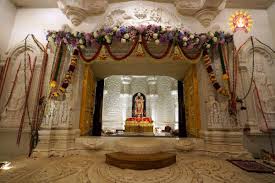
The Ram Mandir in Ayodhya is one of the most important and sacred temples for millions of people in India and around the world. It is built at the place believed to be the birthplace of Lord Rama, one of the most loved and respected deities in Hinduism. The temple represents devotion, culture, and a long journey of history.
A Sacred Place Since Ancient Times
Ayodhya has been mentioned in ancient scriptures like the Ramayana, where it is described as the kingdom of King Dasharatha and the birthplace of his son, Lord Rama. For thousands of years, people have visited this holy city to offer prayers and feel connected to the life and teachings of Rama.
Historical Journey
The history of the Ram Mandir is filled with both devotion and struggle.
For centuries, Hindus believed that a temple once stood at the birthplace of Rama. Over time, different political and social events led to disputes over the site. However, the faith of the devotees remained strong.
A major turning point came in 2019, when the Supreme Court of India gave a historic judgment allowing the construction of the Ram Mandir at the disputed site. This decision ended a long-standing conflict and opened the way for fulfilling a centuries-old dream.
Construction of the New Temple
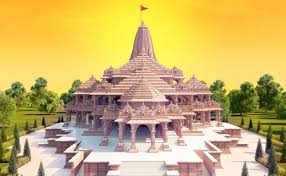
On 5 August 2020, the foundation stone of the Ram Mandir was laid. The temple is designed in the traditional Nagara style of Indian architecture, known for its grand pillars, stone carvings, and tall shikhara (temple tower).
The temple is built using pink sandstone, giving it a majestic and divine appearance. Skilled artisans from different parts of India worked together to create detailed carvings that tell stories from the Ramayana.
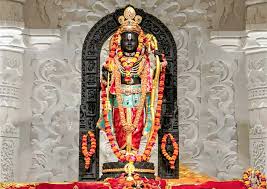
On 22 January 2024, the idol of Ram Lalla (infant form of Lord Rama) was placed in the sanctum sanctorum, marking the Pran Pratishtha ceremony. This day was celebrated across the country with great joy and devotion.
Importance of the Temple
The Ram Mandir is more than just a religious building—it is a symbol of faith, unity, and cultural heritage. It represents the values Lord Rama stood for:
- Truth
- Duty
- Respect
- Courage
- Compassion
Millions of devotees visit Ayodhya to seek blessings, find peace, and experience the spiritual atmosphere of the temple.
Ayodhya Today
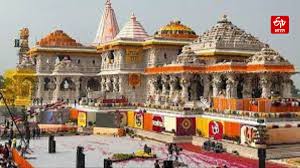
With the construction of the Ram Mandir, Ayodhya has become a major cultural and spiritual center. New roads, ghats, parks, and facilities have been built to welcome devotees and tourists from all over the world. The city now shines with renewed energy and devotion.
History of Ayodhya Ram Mandir (Last 500 Years)
Ayodhya is believed to be the birthplace of Lord Rama, one of the most important deities in Hinduism. For centuries, this place has been considered sacred. The history of the Ram Mandir over the last 500 years includes religious beliefs, conflicts, court cases, and finally the reconstruction of the temple.
1. Before 1528 – Belief in Ram Janmabhoomi
Long before 500 years ago, Hindu scriptures, saints, and local traditions described this site as Ram Janmabhoomi, the exact place where Lord Rama was born. Many pilgrims visited Ayodhya to offer prayers.
2. Around 1528 – Construction of Babri Structure
Historical records say that around 1528, during the Mughal period, a structure called the Babri Masjid was built by Mir Baqi, a general of Emperor Babur.
Many Hindus believed that the mosque was constructed at the birthplace of Lord Rama.
Because of this belief, the site became a point of dispute between Hindus and Muslims.
3. 18th–19th Century – Rising Disputes
During the 1700s and 1800s:
- Hindu worship at the site continued in the outer courtyard.
- British rule later put up fences to separate the inner and outer areas to reduce conflict.
- Hindus worshipped at the outer platform called Ram Chabutra.
4. 1949 – Idol Installation
In December 1949:
- Idols of Lord Rama appeared inside the structure.
- The administration locked the building and stopped both communities from entering.
- The dispute went to court.
5. 1980–1990s – Legal and Political Movement
A large public movement grew in the 1980s and 1990s demanding that a Ram temple be built at the birthplace.
6. 1992 – Demolition of the Structure
On 6 December 1992, the Babri structure was demolished during a large gathering.
This incident caused nationwide tensions and became one of the biggest turning points in the dispute.
7. 2003 – Archaeological Survey of India (ASI) Findings
ASI conducted excavations at the site.
Their report suggested the presence of an older structure below the demolished building, which many believed supported claims of a pre-existing temple.
8. 2010 – Allahabad High Court Verdict
The court divided the land into three parts between:
- Hindus
- Muslims
- Nirmohi Akhara
However, all parties appealed to the Supreme Court.
9. 2019 – Supreme Court Verdict
On 9 November 2019, the Supreme Court of India gave its final judgment:
- The entire disputed land was given for the construction of a Ram Temple.
- A separate 5-acre land was given to the Muslim community to build a mosque.
This judgment ended the 500-year-old dispute.
10. 2020–2024 – Construction of Ram Mandir
- The foundation stone for the new Ram Mandir was laid on 5 August 2020.
- The temple structure is built in classical Nagara style.
- The grand opening of the temple and installation of Ram Lalla idol happened on 22 January 2024.
Simple Summary
- 500 years ago, the site was believed to be Ram’s birthplace.
- In 1528, a mosque called Babri Masjid was built there.
- Disputes continued for centuries.
- In 2019, the Supreme Court gave the land for the Ram Temple.
- By 2024, the new Ram Mandir was inaugurated.